

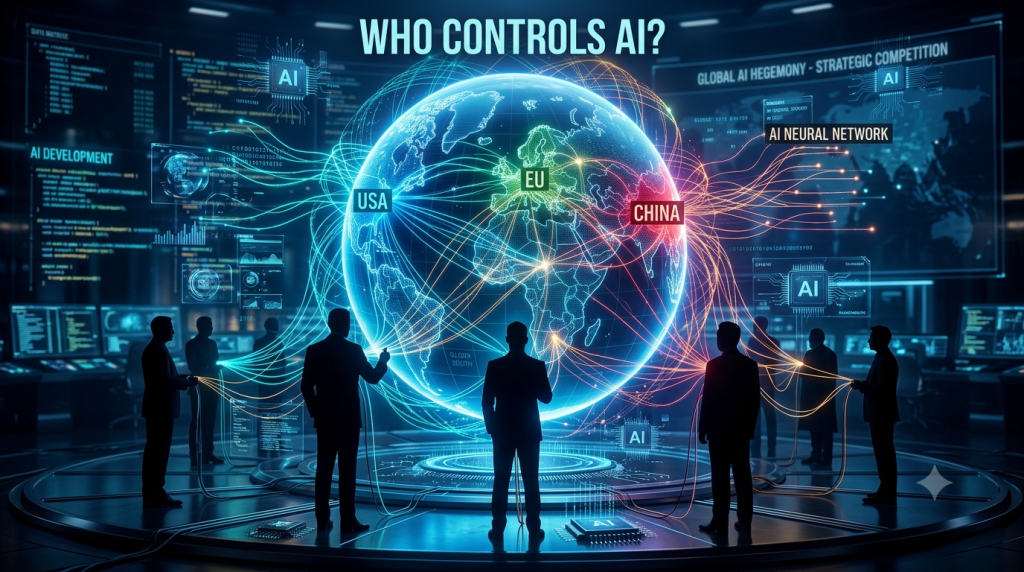
Who Controls AI? Inside the Global Race for AI Regulation in 2026
Introduction: The Battle for the Future of Intelligence
Artificial Intelligence is no longer just a technological breakthrough it’s a geopolitical weapon, an economic driver, and a societal force reshaping the world. In 2026, the stakes have never been higher.
The recent launch of the UN’s “AI for Good” global commission, bringing together world leaders and tech CEOs, signals a turning point. Governments, corporations, and global institutions are now locked in a high-stakes race not just to build AI, but to control it.
So the big question is: Who will control AI and what does that mean for you?
What Is the “AI for Good” Global Commission?
The United Nations’ AI for Good initiative is not entirely new but this latest commission represents a major escalation in global coordination.
Key Objectives:
- Establish global AI governance frameworks
- Promote ethical AI development
- Prevent misuse (deepfakes, autonomous weapons, misinformation)
- Ensure equitable access to AI technologies
This commission brings together:
- Government leaders
- CEOs from major tech companies
- Policy experts and AI researchers
Why It Matters
For the first time, there’s a serious attempt to create unified global rules for AI. But not everyone agrees on what those rules should look like.
The Global AI Power Players
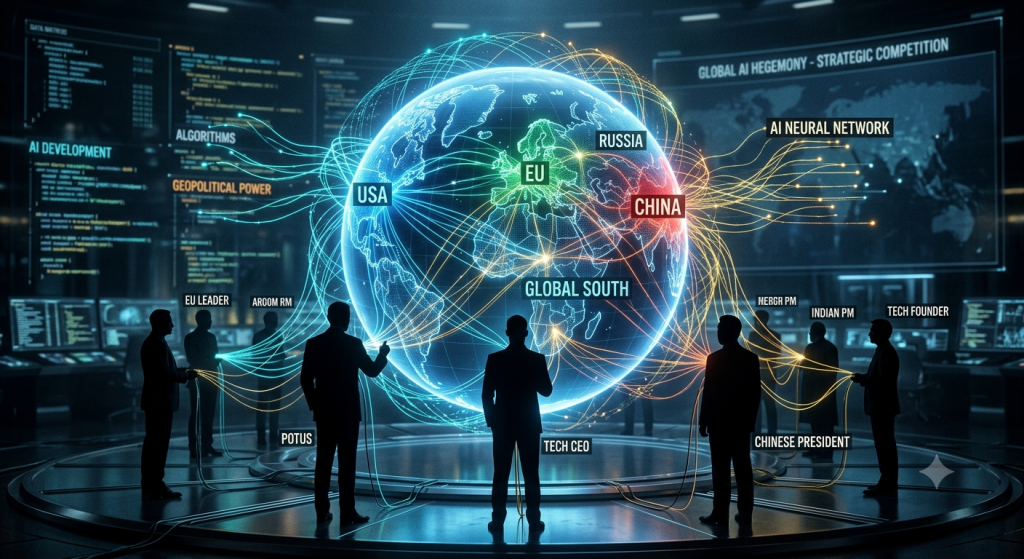
The race to regulate AI is also a race for dominance. Different regions are pushing competing visions of control.
🇺🇸 United States: Innovation First
The U.S. continues to prioritize:
- Rapid AI development
- Private sector leadership
- Flexible regulatory frameworks
Big Tech companies like OpenAI, Google, and Microsoft play a major role in shaping policy.
Challenge: Balancing innovation with accountability.
🇪🇺 European Union: Regulation First
The EU has taken the lead in strict AI governance through laws like:
- The AI Act
- Data protection frameworks
Focus areas include:
- Transparency
- User safety
- Ethical AI use
Challenge: Avoiding over-regulation that stifles innovation.
🇨🇳 China: State-Controlled AI
China’s approach is fundamentally different:
- Strong government oversight
- AI aligned with national goals
- Heavy investment in surveillance and infrastructure
Challenge: Balancing control with global trust and cooperation.
🌍 The United Nations: Global Referee?
The UN aims to act as a neutral coordinator, but it faces limitations:
- No enforcement power
- Conflicting national interests
- Dependence on cooperation
Still, the AI for Good commission could become the closest thing to a global AI rulebook.
Big Tech vs Governments: Who Really Holds Power?
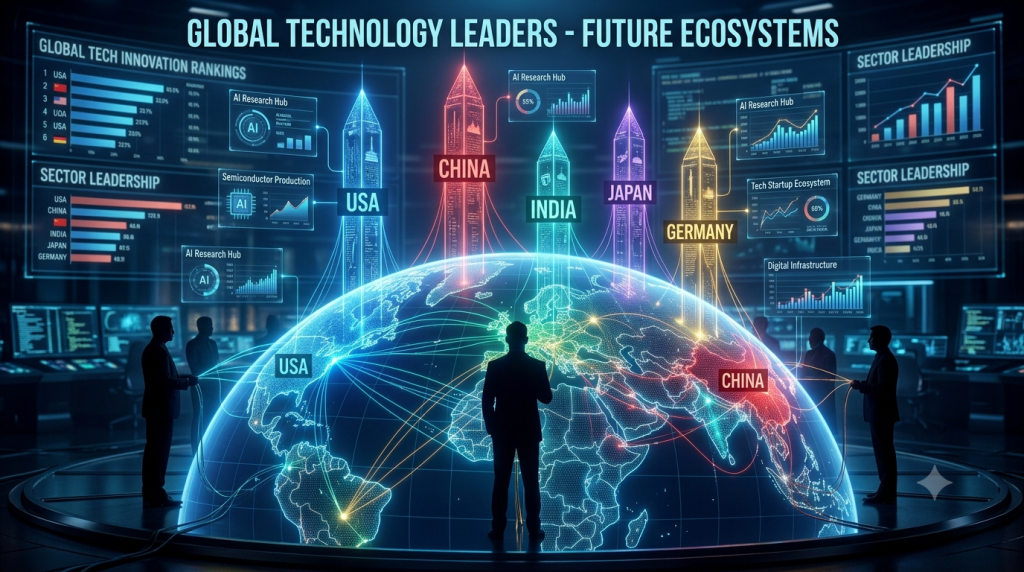
One of the biggest tensions in AI regulation is between governments and tech giants.
Why Tech Companies Are So Powerful:
- They build and own the most advanced AI systems
- They control massive datasets
- They move faster than regulators
Why Governments Still Matter:
- They create laws and enforcement mechanisms
- They control national security implications
- They can restrict or enable AI deployment
The Reality
Control over AI is not binary it’s shared, contested, and constantly shifting.
We are entering a world where:
- Governments regulate
- Companies innovate
- International bodies attempt coordination
Key Issues Driving the AI Regulation Race
1. AI Safety and Existential Risks
Concerns about superintelligent AI are no longer theoretical. Experts warn about:
- Loss of human control
- Autonomous decision-making risks
- Systemic failures
Organizations like OpenAI and DeepMind have already acknowledged these risks publicly.
2. Misinformation and Deepfakes
AI-generated content is becoming indistinguishable from reality.
Impacts include:
- Election interference
- Fake news amplification
- Identity fraud
Governments are under pressure to act quickly.
3. Economic Disruption
AI is reshaping the job market:
- Automation replacing roles
- Creation of new digital economies
- Increased wealth concentration
According to reports from the World Economic Forum, millions of jobs will be transformed not just lost.
4. Data Privacy and Ownership
Data is the fuel of AI.
Key questions:
- Who owns your data?
- How is it used?
- Should users be compensated?
This remains one of the most controversial aspects of AI regulation.
What This Means for the Future
The outcome of this global race will shape:
🌐 The Internet You Use
- More regulated platforms
- Safer but possibly more restricted content
💼 Your Career
- New AI-driven job opportunities
- Need for digital and AI literacy
💰 The Global Economy
- AI-driven economic growth
- Power shifting toward AI leaders
🔐 Your Privacy
- Stricter data rules (or increased surveillance) depending on region
Conclusion: The Future Is Being Decided Now
AI is not just another tech trend it’s the foundation of the next global order.
The launch of the UN’s AI for Good commission shows one thing clearly:
The world is no longer asking if AI should be regulated it’s deciding how and by whom.
Whether control ends up in the hands of governments, corporations, or global alliances, one thing is certain:
👉 The decisions made today will define the digital world of tomorrow.
Stay informed. Stay ahead.
Follow Gamecoz for the latest insights shaping tech, finance, crypto, and the future of global innovation.
FAQ Section
1. What is AI regulation?
AI regulation refers to laws and policies that govern how artificial intelligence is developed, deployed, and used responsibly.
2. Why is AI regulation important in 2026?
Because AI is becoming more powerful, influencing economies, politics, and daily life making oversight essential.
3. Who currently controls AI?
AI is controlled by a mix of tech companies, governments, and emerging global bodies like the UN.
4. What is the UN AI for Good initiative?
It’s a global effort by the United Nations to ensure AI benefits humanity while minimizing risks.
5. Will AI be globally regulated?
Possibly, but achieving unified global regulation is challenging due to differing national interests.
